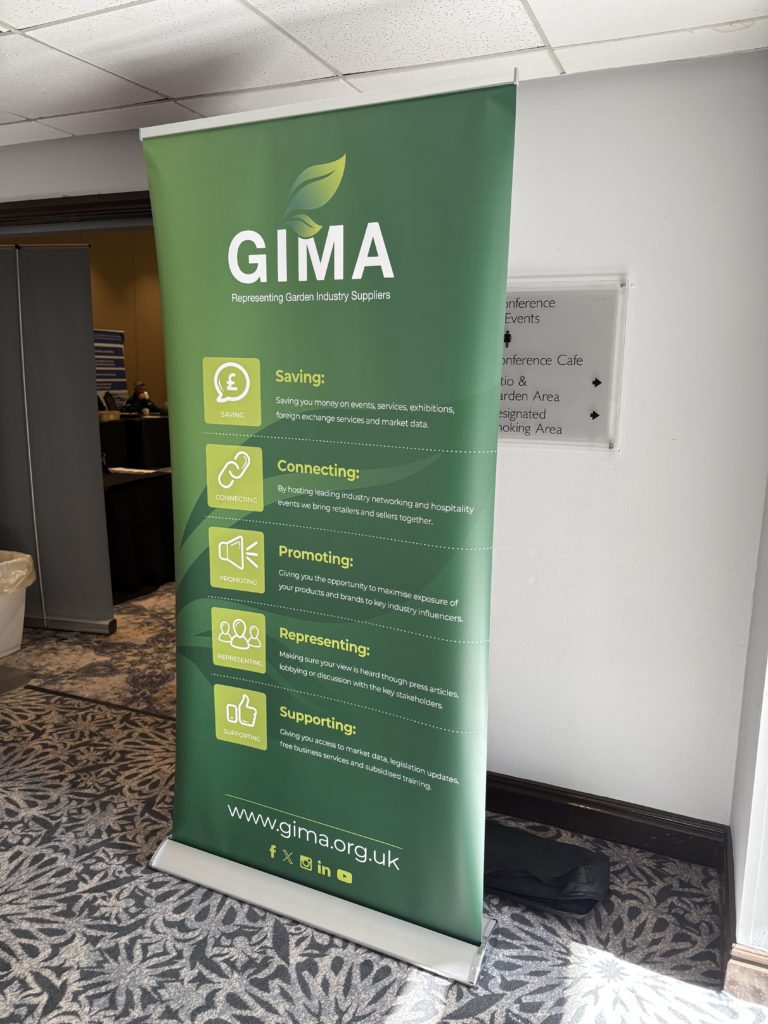
Last week, we attended the GIMA Day Conference, where the theme for the day was The Future of the Supply Chain for Garden Products. It was a fantastic opportunity to hear from industry experts, catch up with familiar faces, and take the temperature of where the gardening sector is heading next. As an Associate GIMA member, we were also particularly excited to be exhibiting as well, which meant plenty of great conversations with suppliers and retailers throughout the day.
The conference began with a warm welcome from Vicky Nuttall, who is stepping down as director of GIMA after 12 years in the role. Vicky has been a hugely respected figure in the industry and has helped guide GIMA through a period of real change for the sector. She handed over to Martin Ward, who we know well from our work with David Austin Roses, so it was lovely to see a familiar face taking up the baton. We’re looking forward to seeing what comes next for GIMA under his leadership.

Online marketplaces
The first talk focused on digital disruption and the rise of the marketplace, and it quickly became clear that convenience is king for today’s consumers. Shoppers expect to be able to find products quickly, compare prices easily and order from wherever they happen to be — often with just a few taps on their phone. However, alongside convenience, trust has never been more important. Customer reviews, ratings and brand reputation are playing an increasingly large role in purchasing decisions. For brands in the gardening sector, the message was clear: embrace multiple marketplaces to maximise visibility, but don’t neglect your own website. Having several routes to market spreads the risk and keeps brands in control of their own messaging.
Encouragingly for garden centres, physical retail still plays a crucial role. People still want to see, touch and experience products in person – particularly in gardening where quality, size and feel really matter. That said, many customers will happily browse in store and then go online to compare prices or read reviews before committing to a purchase. For larger or bulkier items, online marketplaces may even present an opportunity for garden centres to sell products that customers don’t want to wrestle into the boot of their car. The overall takeaway? Data and insights are becoming essential tools for understanding where customers shop and what they buy.
Talent, costs and working smarter
The next session explored the future of talent within the industry. Rising costs are putting pressure on recruitment and staffing, forcing companies to think carefully about how they build their teams. Rather than simply adding more people, the advice was to invest in capabilities of the existing team and to build from within. In other words, working smarter rather than just getting bigger. Part of being smarter includes building trust within the team, and remaining as transparent with them as possible. For suppliers negotiating with retailers, these economic pressures are also feeding into conversations around pricing and margins, something most businesses in the sector will be familiar with right now.
Distribution and the route to market
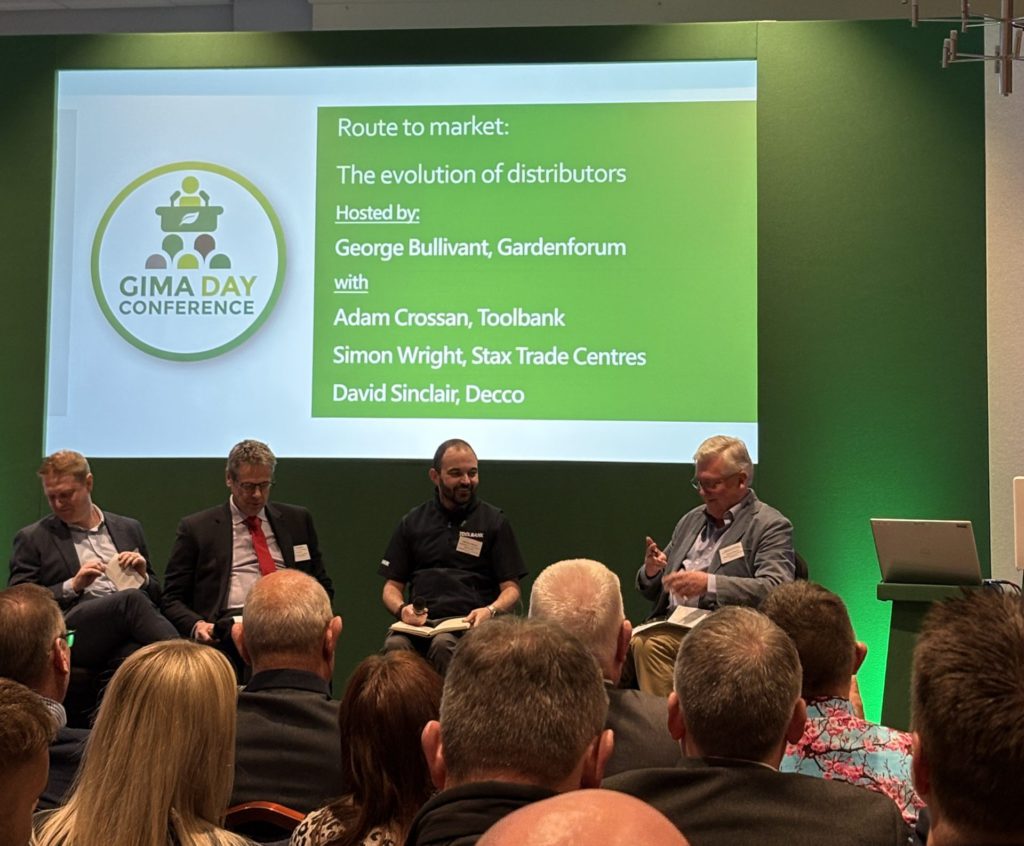
One of the most interesting discussions of the day came from a panel looking at route to market and the evolution of distributors, featuring representatives from Toolbank, Stax and Decco. A key point raised was that gardening is quite different from the DIY sector, despite some overlap in products and retail environments. The seasonal nature of gardening and the emotional connection consumers have with their gardens make it a unique market.
The panel explored the pros and cons of own-brand products versus established brand leaders, as well as the value of exclusivity for retailers. Ultimately, the consensus was that the greatest opportunity for growth lies in closer collaboration between retailers, suppliers and distributors, particularly through better communication and sharing of data.
Of course, challenges remain. The ongoing struggles of the high street continue to impact the sector, and distributors often find themselves in the middle of complex route-to-market decisions made by manufacturers and brands.
Looking ahead to Glee
After lunch, Matthew Mein, Event Director for Glee, gave an update on this year’s show and the opportunities it offers GIMA members. One particularly exciting development is that Glee will run alongside Autumn Fair for the first time, putting gardening brands in front of a much wider retail audience.
The supplier of tomorrow
The afternoon panel, chaired by Trevor Pfeiffer from Garden Trade News, brought together Kate Ebbens from Woodlodge, Sarah Hill from Meadow View Stone, and Nigel Thompson from Sipcam to discuss the future challenges facing suppliers.
Several themes emerged, including the gradual decline of independent garden centres, which can make it harder for smaller suppliers to reach the market. Weather unpredictability also continues to play its part, making planning difficult and sometimes dampening innovation. Add rising costs into the mix and it’s clear suppliers have plenty to juggle. However, the panel also stressed the importance of building strong brands and focusing on long-term value, rather than allowing rebate structures to dominate commercial relationships. Independent garden centres still offer huge potential thanks to their loyal customers and specialist knowledge, but brands need a clear strategy if they want to work effectively with them.
A reminder of the industry’s heart
One of the most touching moments of the day came from Boyd Douglas-Davies, chair of the Greenfingers Charity, which creates gardens in children’s hospices across the UK. Last year alone, the charity raised an incredible £1 million, every penny of which went into building these special spaces for children and their families. It was a powerful reminder of the positive impact the gardening industry can have beyond business.
The conference wrapped up with insights from Mark Farnsworth on the success of Yorkshire Garden Centres, before closing remarks from GIMA President Craig Hall, who also paid tribute to Vicky Nuttall’s years of dedication to the organisation.
Overall, it was an insightful and enjoyable day. Events like this are always a brilliant way to step back from the day-to-day and look at the bigger picture. From digital marketplaces and evolving distribution models to the future of suppliers, the gardening sector is certainly not standing still — and as a specialist gardening PR agency, staying close to these conversations helps ensure Honest Communications continues to support clients with insight-led, industry-savvy communications.